
Advanced Search

Content Type: News & Analysis
18th December is International Migrants Day. It’s a day designated by the United Nations, dedicated to recognising the “important contribution of migrants while highlighting the challenges they face.”As we write this third edition of our annual post for International Migrants Day, in many ways the outlook for the rights of people on the move feels even bleaker than it did a year ago.We have seen governments trying to “rewrite global refugee laws”, tightening restrictions on migrants’ rights,…

Content Type: News & Analysis
Yesterday the Investigatory Powers Tribunal announced next steps in Apple’s and PI’s challenges to the purported UK order undermining iCloud’s security.The Tribunal declared that it will aim to hear much of Apple’s case, as well as PI and our co-claimants’, in public based on assumed facts. The Tribunal will convene a seven day hearing to be scheduled in early 2026. Its aim will be to hear Apple’s case and PI’s case during those seven days.This ‘case management order’ follows submissions from…

Content Type: Long Read
Period tracking apps and the rollback of reproductive rightsThe aftermath of the overturning of Roe v. Wade in the United States (US) sparked widespread debate and concern that data from period tracking apps could be use to criminalise those seeking abortion care.While the surveillance and criminalisation of reproductive choices are neither new nor unique to the US, the scale and intensity of today’s crisis continue to grow. To put it into perspective, 22 million women and girls of reproductive…


Content Type: Press release
FOR IMMEDIATE RELEASELONDON - 7 April 2025The Investigatory Powers Tribunal (IPT) has confirmed it will hear Privacy International, Liberty and two individuals’ challenge to the legality of the Home Secretary’s decision to use her powers to secretly force Apple to allegedly give the UK Government access to users’ secured data stored on iCloud. The challenge will also cover the legality of the Government issuing these types of notices at all. Privacy International and Liberty,…
.jpg.webp?itok=TGfv3XEI)
Content Type: News & Analysis
As the New York Times reports the health programmes are being cut by USAID cuts, the US Government declares them as “inconsistent with the national interest or agency policy priorities.” Sadly at PI we know the kind of foreign aid that governments believe are in the national interest: surveillance funding.We’re alarmed by aid budgets being cut by governments world-wide. People will be hurt, and people will die.And while most of the news has been dominated by the US’s cuts, the UK and France…
.jpg.webp?itok=9MSjjiRb)
Content Type: Explainer
Imagine this: a power that secretly orders someone anywhere in the world to abide and the receiver can’t tell anyone, can’t even publicly say if they disagree, and can’t really question the power in open court because the secret order is, well, secret. Oh and that power affects billions of people’s security and their data. And despite being affected, we too can’t question the secret order.In this piece we will outline what’s ridiculous, the absurd, and the downright disturbing about what’s…
.png.webp?itok=nuGYaNiD)
Content Type: News & Analysis
On 15 May 2024, a London Administrative Court handed down its judgment in the case of ADL & Ors v Secretary of State for the Home Department, just two months after another court judgment and a ruling of the UK's data protection authority (ICO). The four Claimants in this latest case (including asylum seekers and survivors of trafficking) were challenging the UK Home Office's policy of placing people released from immigration detention under 24/7 GPS surveillance - either by shackling them…

Content Type: News & Analysis
In a judgment of 14 October 2022, the UK High Court ordered the UK Home Office to provide remedy to the thousands of migrants affected by its unlawful policy and practice of seizing mobile phones from people arriving by small boats to UK shores.
The availability and spread of new technologies, and the exponential amounts of data they generate, are regularly being abused by governments to surveil and control people - but these new forms of surveillance are only starting to make their way through…

Content Type: News & Analysis
After almost 20 years of presence of the Allied Forces in Afghanistan, the United States and the Taliban signed an agreement in February 2020 on the withdrawal of international forces from Afghanistan by May 2021. A few weeks before the final US troops were due to leave Afghanistan, the Taliban had already taken control of various main cities. They took over the capital, Kabul, on 15 August 2021, and on the same day the President of Afghanistan left the country.As seen before with regime…

Content Type: News & Analysis
Around the world, we see migration authorities use technology to analyse the devices of asylum seekers. The UK via the Policing Bill includes immigration officers amongst those who can exercise powers to extract information from electronic devices. There are two overarching reasons why this is problematic:
The sole provision in the Policing Bill to extract information rests on voluntary provision and agreement, which fails to account for the power imbalance between individual and state. This…

Content Type: Press release
Privacy International announces the launch of two reports as part of its work on Defending Democracy and Dissent.
The report Online Political Ads: A study of inequality in transparency standards builds on our 2019 research findings and delves into the adverse impacts of non-existent or limited transparency on democracy based on two case-studies developed by our partners InternetLab and ELSAM.
The report, Micro-Targeting in Political Campaigns,…

Content Type: News & Analysis
Privacy International (PI) welcomes today's report from the UK Information Commissioner's Office (ICO) into three credit reference agencies (CRAs) which also operate as data brokers for direct marketing purposes. As a result, the ICO has ordered the credit reference agency Experian to make fundamental changes to how it handles people's personal data within its offline direct marketing services.
It is a long overdue enforcement action against Experian.…

Content Type: Press release
MI6 has been forced to apologise to the Investigatory Powers Tribunal after two of its officers asked court staff to return documents relating to MI6’s use of agents and not show them to judges. The Tribunal suggested MI6’s actions were “inappropriate interference”.
The revelation emerged in an ongoing legal case considering what crimes intelligence informants are allowed to commit, after it was revealed that MI5 maintains a secret policy under which agents can be “authorised” to…

Content Type: Long Read
Immunity Passports have become a much hyped tool to cope with this pandemic and the economic crisis. Essentially, with immunity passports those who are 'immune' to the virus would have some kind of certified document - whether physical or digital. This 'passport' would give them rights and privileges that other members of the community do not have.
This is yet another example of a crisis-response that depends on technology, as we saw with contact-tracing apps. And it is also yet another…

Content Type: Case Study
Facial recognition technology (FRT) is fairly present in our daily lives, as an authentication method to unlock phones for example. Despite having useful applications, FRT can also be just another technology used by those in power to undermine our democracies and carry out mass surveillance. The biometric data collected by FRT can be as uniquely identifying as a fingerprint or DNA. The use of this technology by third parties, specially without your consent, violates your right to privacy.
The…

Content Type: Case Study
Well into the 21st century, Serbia still does not have a strong privacy culture, which has been left in the shadows of past regimes and widespread surveillance. Even today, direct police and security agencies’ access to communications metadata stored by mobile and internet operators makes mass surveillance possible.
However, a new threat to human rights and freedoms in Serbia has emerged. In early 2019, the Minister of Interior and the Police Director announced that Belgrade will receive “a…

Content Type: Press release
Today, the ICO has issued a long-awaited and critical report on Police practices regarding extraction of data from people's phones, including phones belonging to the victims of crime.
The report highlights numerous risks and failures by the police in terms of data protection and privacy rights. The report comes as a result of PI’s complaint, dating back to 2018, where we outlined our concerns about this intrusive practice, which involves extraction of data from devices of victims, witnesses…
Content Type: Press release
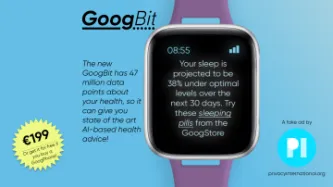
On 15 June 2020, Google formally notified the European Commission of its proposed acquisition of Fitbit, enabling them to capture a massive trove of sensitive health data that will expand and entrench its digital dominance. Privacy International is calling on EU regulators to block the merger.
In November 2019, Google announced its plan to acquire Fitbit, a company that produces and sells health tracking technologies and wearables - including smartwatches, health trackers and smart scales -…

Content Type: News & Analysis
On June 9th, in light of the global debate against racial injustices, the company IBM announced they would stop selling facial recognition. In a letter to the US congress, they demanded a “national dialogue on whether and how facial recognition technology should be employed by domestic law enforcement agencies.”
It is worth noting first of all that it is not entirely clear that IBM is actually stopping facial recognition. The letter states that "IBM no longer offers general purpose IBM facial…

Content Type: News & Analysis
Yesterday, Amazon announced that they will be putting a one-year suspension on sales of its facial recognition software Rekognition to law enforcement. While Amazon’s move should be welcomed as a step towards sanctioning company opportunism at the expense of our fundamental freedoms, there is still a lot to be done.
The announcement speaks of just a one-year ban. What is Amazon exactly expecting to change within that one year? Is one year enough to make the technology to not discriminate…

Content Type: Video
Given everything that's happening at the moment around the world, we've decided to postpone our episode on ID in Kenya until next week.
You can listen and subscribe to the podcast where ever you normally find your podcasts:
Spotify
Apple podcasts
Google podcasts
Castbox
Overcast
Pocket Casts
Peertube
Youtube
Stitcher
And more...
Some of the resources we mentioned in the episode can be found here:
ACLU: know your rights: https://www.aclu.org/know-your-rights/protesters-…

Content Type: News & Analysis
This week, we read that a former Apple contractor who blew the whistle on the company’s programme to listen to users’ Siri recordings has decided to go public, in protest at the lack of action taken as a result of the July 2019 disclosures. The news adds to a series of revelations that have been reported over the past months.
While the issue raises serious questions regarding the compatibility of such practices with data protection laws, at the same time, it highlights a wider problem that…

Content Type: News & Analysis
As parts of the world are preparing to go back to factories, offices, and other workplaces, or in the case of Amazon, trying to make continually unsafe workplaces less hazardous, we must be on the watch yet again for profiteering, data-grabs, and surveillance as a solution to an undefined problem.
Many of the measures are predicated on the idea of catching employees who are sick. But, why do employers think that employees are or will lie about their health? Is it because they love their jobs…
Content Type: Long Read
This week saw the release of a coronavirus tracking app within the United Kingdom, initially to be trialled in the Isle of Wight. Privacy International has been following this closely, along with other ‘track and trace’ apps like those seen in over 30 other countries.
The UK’s app is no different. It is a small part of a public health response to this pandemic. As with all the other apps, it is vital that it be integrated with a comprehensive healthcare response, prioritise people, and…

Content Type: Long Read
On 15th April Margaret Atwood, author of the Handmaid's Tale, gave an interview to BBC Radio 5 Live where she commented that ‘people may be making arrangements that aren’t too pleasant, but it’s not a deliberate totalitarianism’. You can read more about the interview in the Guardian.
While we agree with Margaret Atwood that we are not necessarily entering an era of "deliberate totalitarianism" we have written the following open letter (download link at the bottom of the page) to her as a ‘…

Content Type: News & Analysis
These are difficult and challenging times around the world.
In this global crisis, businesses are stepping in to support efforts by Governments and public health authorities to seek to control the impact of the virus.
This is important, as help of all kinds is sorely needed. However, we must also be wary that industry initatives and public-private partnerships are not used as an opportunity to profit from this crisis or to exploit data without legal safeguards.
Companies all over the world…

Content Type: News & Analysis
Cloud extraction allows law enforcement agencies to take huge amounts of your data from the Cloud via a legal back door. If law enforcement seize your phone or take it from a victim of crime, they can extract tokens or passwords from the device which lets them get access to data from apps such as Uber, Instagram, Slack, Gmail, Alexa and WhatsApp.
In so doing, law enforcement agencies can avoid official channels through cloud companies such as Google, Apple…
Content Type: Long Read
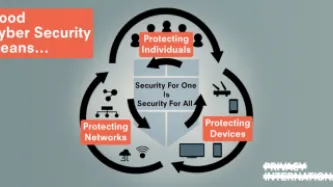
The pressing need to fix our cybersecurity (mis)understandings
Despite all the efforts made so far by different, cybersecurity remains a disputed concept. Some states are still approving cybersecurity laws as an excuse to increase their surveillance powers. Despite cybersecurity and cybercrime being different concepts, the confusion between them and the broad application of criminal statutes is still leading to the criminalise legitimate behaviour.
All of this represents a sizable challenge…

Content Type: Long Read
In December 2018, Privacy international exposed the dubious practices of some of the most popular apps in the world.Out of the 36 apps we tested, we found that 61% automatically transfer data to Facebook the moment a user opens the app. This happens whether the user has a Facebook account or not, and whether they are logged into Facebook or not. We also found that some of those apps routinely send Facebook incredibly detailed and sometimes sensitive personal data. Again, it didn’t matter if…